
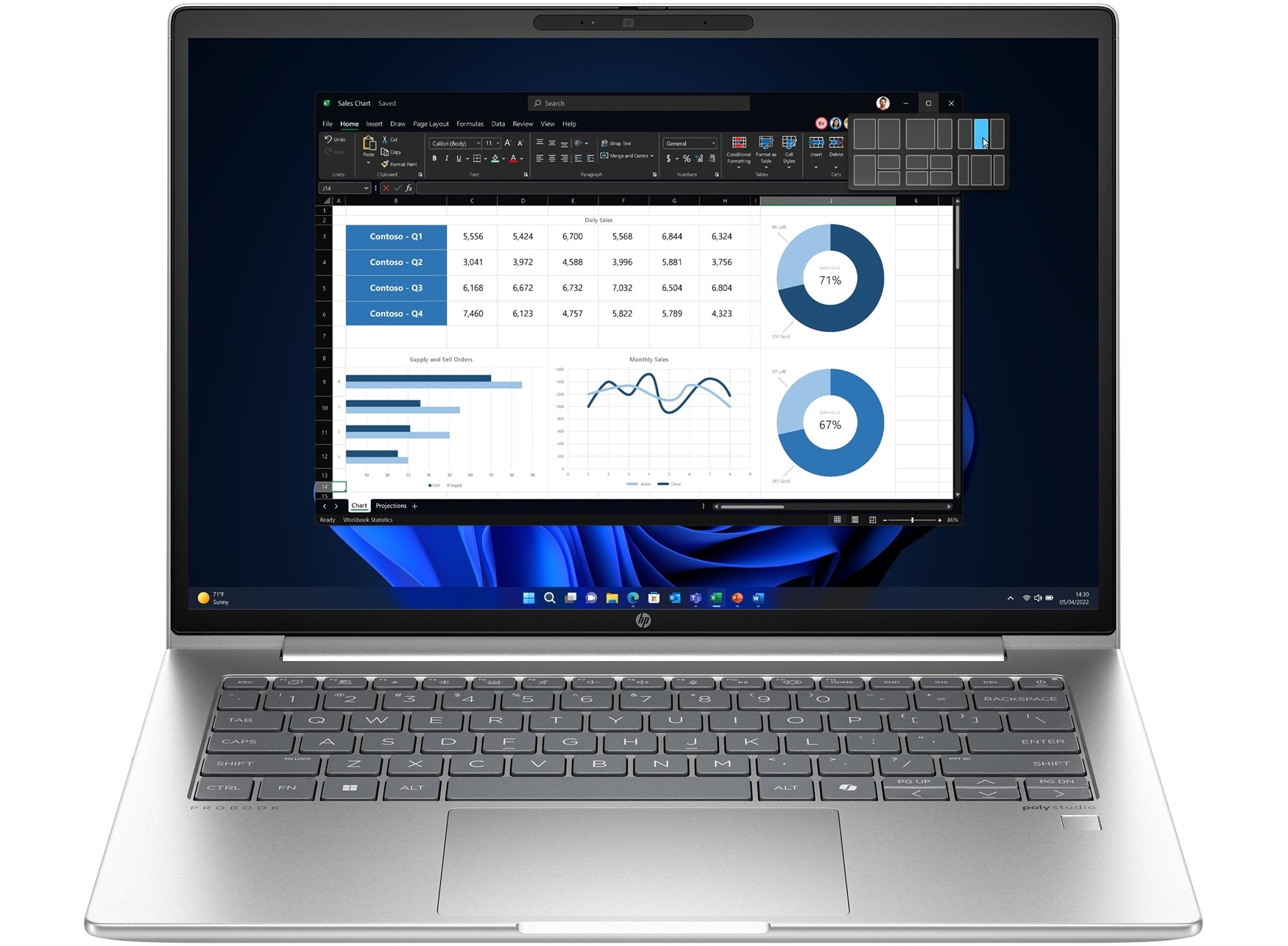
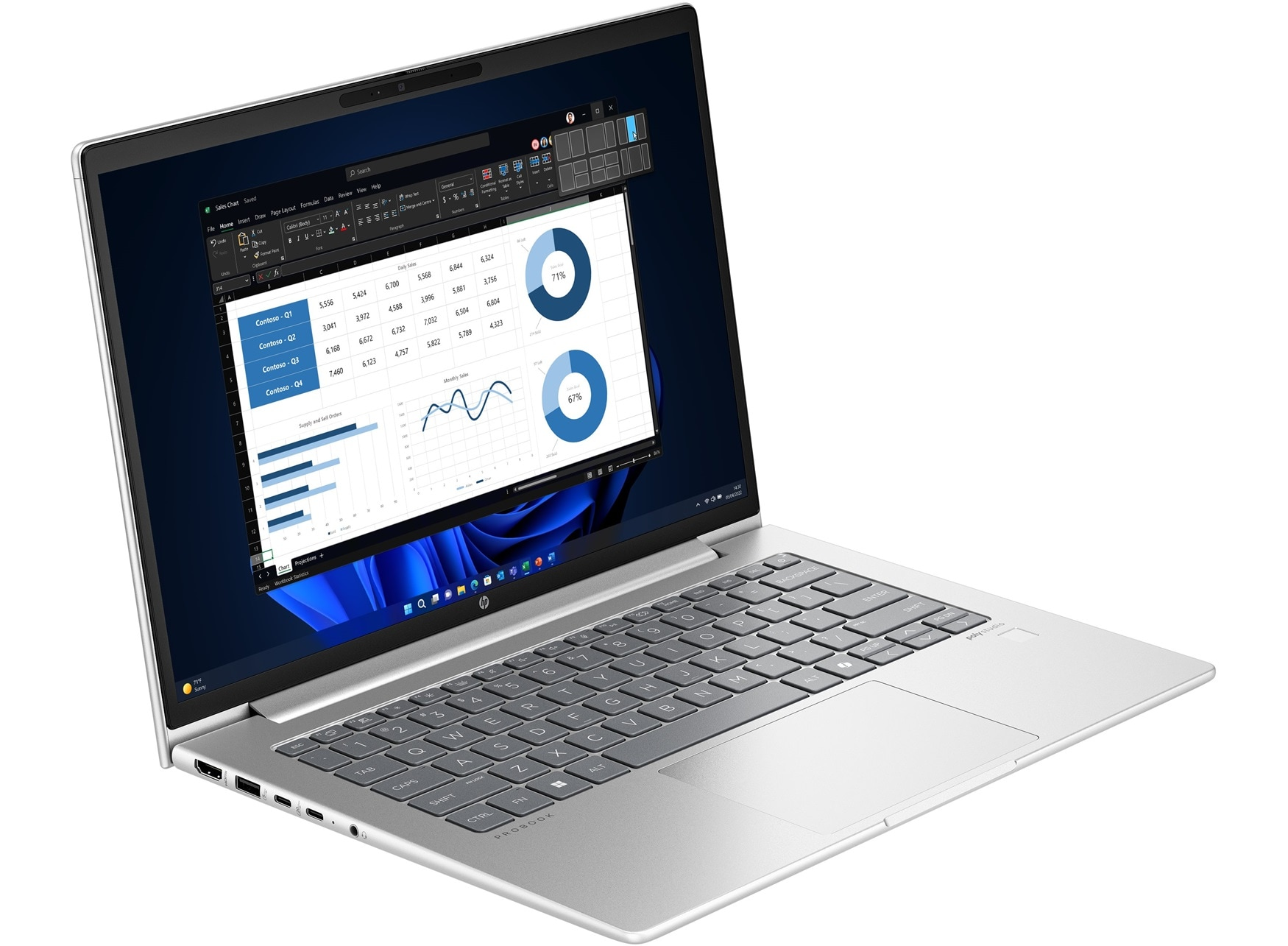
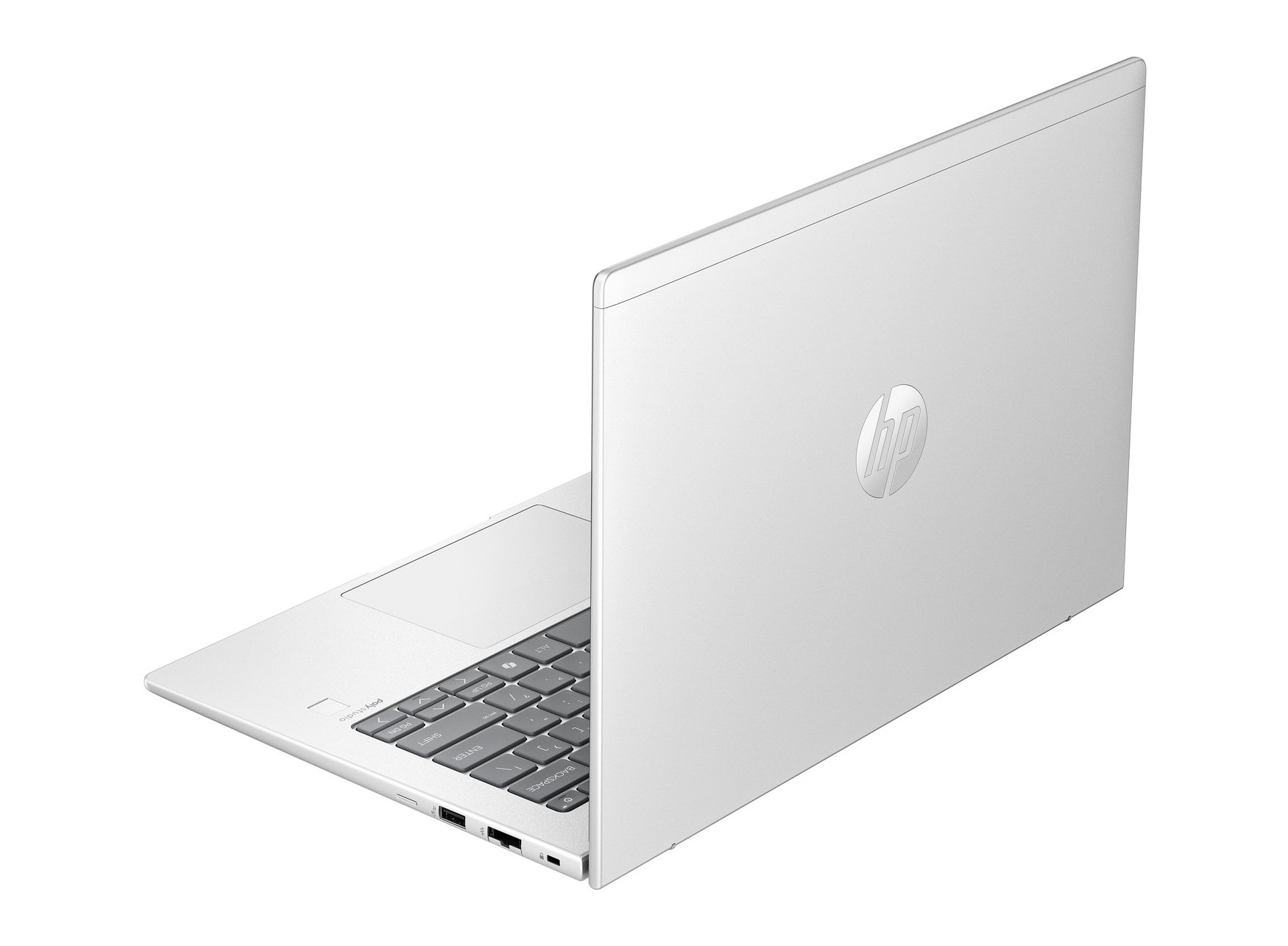
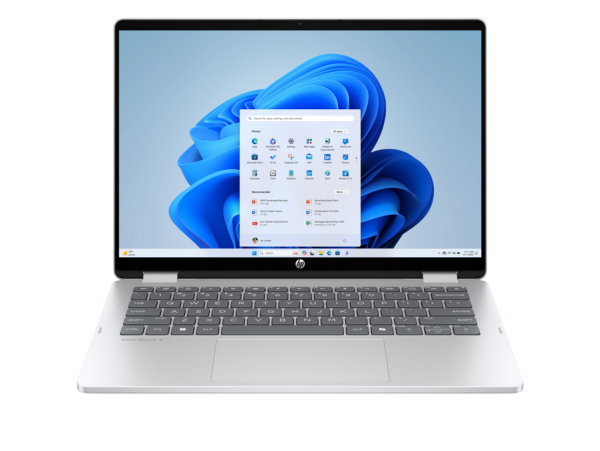
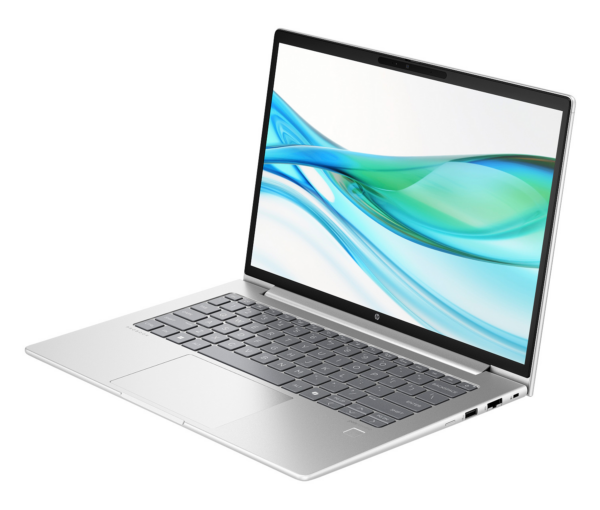
HP ProBook 440 G11 AI PC – Intel Core Ultra 5 125U, 14-Inch WUXGA, FreeDOS — Africa Edition (A38B9ET)
The HP ProBook 440 G11 A38B9ET is the HP Africa region variant of the Meteor Lake-powered ProBook 440 G11 business AI notebook. It carries identical hardware to the EMEA Middle East variant CT9P2ET — the same Intel Core Ultra 5 125U processor, 16 GB DDR5-5600 memory, 512 GB NVMe SSD, 14-inch WUXGA 16:10 display, and FreeDOS configuration — but is distributed through HP’s Africa channel and appears on HP Africa, HP Nigeria, and Kenyan retail platforms. Organisations sourcing hardware through regional distributors in Kenya, sub-Saharan Africa, and the broader HP Africa market will encounter A38B9ET as the relevant part number. Additionally, the A38B9ET includes a fingerprint reader and a backlit keyboard as confirmed by Kenya-market retail listings — closing one of the open flags on the CT9P2ET page. For buyers comparing both part numbers, the hardware is the same; the suffix reflects regional channel routing, not a difference in specification.
Technical Specifications
Processor
| Attribute | Detail |
|---|---|
| Model | Intel Core Ultra 5 125U (Meteor Lake, 1st Gen Core Ultra) |
| Architecture | 12 cores / 14 threads (2 P-cores + 8 E-cores + 2 LP E-cores) |
| P-core Max Turbo | 4.3 GHz |
| E-core Max Turbo | 3.6 GHz |
| LP E-core Max Turbo | 2.1 GHz |
| Cache | 12 MB Intel Smart Cache |
| NPU | Intel AI Boost — 11 TOPS |
| Integrated GPU | Intel Graphics (Intel Arc Xe-LPG, 4-core / 64 EU) |
| TDP | 15 W (configurable) |
Memory
| Attribute | Detail |
|---|---|
| Installed | 16 GB DDR5-5600 MT/s |
| Configuration | 1 × 16 GB SODIMM (single-channel at purchase) |
| Slots | 2 × SODIMM (both user-accessible) |
| Maximum | 32 GB |
Single-channel RAM at purchase: The A38B9ET ships with a single 16 GB DDR5-5600 SODIMM. Single-channel mode reduces memory bandwidth available to the Intel Arc GPU and the NPU. Adding a second matched 16 GB DDR5-5600 SODIMM activates dual-channel mode, improves GPU throughput, and doubles total memory to 32 GB — a recommended first upgrade for users with graphics-intensive or AI-heavy workloads. The Intel Arc GPU designation does not change between single and dual-channel configurations, but real-world graphics performance improves measurably.
Storage
| Attribute | Detail |
|---|---|
| Drive | 512 GB NVMe PCIe M.2 SSD |
| Form factor | M.2 2280 (field-replaceable) |
Display
| Attribute | Detail |
|---|---|
| Size | 14-inch diagonal |
| Panel type | IPS, UWVA, anti-glare |
| Resolution | 1920 × 1200 (WUXGA) |
| Aspect ratio | 16:10 |
| Rated brightness | 300 nits |
| Colour gamut | 45% NTSC |
| Touch | No |
| Refresh rate | 60 Hz |
Graphics
| Attribute | Detail |
|---|---|
| GPU | Intel Graphics (Intel Arc Xe-LPG, 4-core / 64 EU) |
| Architecture | Meteor Lake integrated GPU tile (Arc-generation) |
| VRAM | Shared system memory |
Connectivity
| Attribute | Detail |
|---|---|
| Wi-Fi | Wi-Fi 6E (802.11ax), 2 × 2 |
| Bluetooth | 5.3 |
| Ethernet | Gigabit Ethernet (RJ-45) |
Ports
| Port | Specification |
|---|---|
| USB-C | 2 × USB-C 20 Gbps (Power Delivery, DisplayPort 1.4, HP Sleep and Charge) |
| USB-A | 2 × USB-A 5 Gbps (1 charging, 1 standard) |
| HDMI | 1 × HDMI 2.1 |
| Ethernet | 1 × RJ-45 Gigabit |
| Audio | 1 × 3.5 mm headphone/microphone combo jack |
| Security | Nano Security Lock Slot |
| ODD | None |
Camera & Audio
| Attribute | Detail |
|---|---|
| Webcam | 720p HD with physical camera shutter |
| Optional webcam | 5MP + IR with Temporal Noise Reduction |
| Audio system | Poly Studio |
| Speakers | Dual stereo with discrete amplifiers |
| Microphone | Dual-array, integrated |
| Keyboard | Backlit, spill-resistant (confirmed on A38B9ET) |
Security
| Feature | Detail |
|---|---|
| Fingerprint reader | Yes — confirmed on A38B9ET |
| HP Sure Start | Self-healing BIOS |
| HP Sure Run | Monitors and restarts critical security processes |
| HP Sure Click | Hardware-enforced browser and attachment isolation |
| HP Sure Sense | Deep-learning AI malware detection |
| HP Wolf Security | Hardware-enforced endpoint protection |
| Camera shutter | Physical privacy shutter on base 720p webcam |
| TPM | TPM 2.0 (Firmware) |
| Physical | Nano Security Lock Slot |
Battery & Power
| Attribute | Detail |
|---|---|
| Capacity | 3-cell, 56 Wh Li-Ion |
| Fast charge | 50% in 30 minutes (HP Fast Charge) |
| Adapter | HP Standard 45 W USB-C adapter |
Operating System
| Attribute | Detail |
|---|---|
| OS | FreeDOS (no Windows licence included) |
| Compatibility | Windows 11 Pro, Windows 10 Pro, Ubuntu (user-supplied) |
| AI feature note | Copilot, Windows Studio Effects, and NPU-accelerated features require Windows 11 |
Sustainability
| Attribute | Detail |
|---|---|
| Chassis | 50% post-industrial recycled stamped aluminium |
| Packaging | 100% sustainably sourced outer box and recycled-fibre corrugated cushions |
Physical
| Attribute | Detail |
|---|---|
| Colour | Pike Silver |
| Dimensions | 318.52 × 224.28 × 17.02 mm |
| Weight | Starting at 1.39 kg |
| MIL-STD | MIL-STD-810H |
Use Cases
HP Africa Channel Procurement
The A38B9ET suffix is HP’s Africa-region part number for this configuration. Organisations procuring through HP Africa-authorised distributors in Kenya, Nigeria, and sub-Saharan Africa should use A38B9ET when placing purchase orders and quoting in tenders. The hardware is identical to the EMEA Middle East variant CT9P2ET, and both part numbers draw on the same QuickSpecs documentation (c08915500). Furthermore, the Africa-channel price point for A38B9ET is often lower than EMEA-imported CT9P2ET units owing to regional distribution efficiencies — verify current pricing with your HP Africa-authorised reseller.
IT Fleet Deployments with Volume OS Licensing
FreeDOS makes the A38B9ET the standard configuration for organisations with Microsoft Open Value or volume licence agreements. IT departments can image these units directly from their Windows Deployment Services infrastructure, applying organisation-specific configurations, security baselines, and application packages from day one. Additionally, the dual accessible SODIMM slots and field-replaceable M.2 SSD allow fleet memory and storage upgrades without requiring devices to leave the building.
AI-Ready Infrastructure Without Cloud Dependency
For Kenyan enterprises and NGOs operating in environments where internet connectivity is inconsistent, the 11 TOPS NPU enables on-device AI processing for noise suppression, background blur, and intelligent workload management without routing through cloud services. This is a meaningful operational advantage in co-working spaces, satellite offices, and field deployments where bandwidth is a shared or constrained resource. However, Windows 11 must be installed first — the NPU hardware is present in the FreeDOS configuration but AI features only activate once Windows 11 or a compatible OS is deployed.
Hybrid and Mobile Professionals
The 1.39 kg chassis, 56 Wh battery with fast charge, and MIL-STD-810H certification together make the ProBook 440 G11 a practical choice for professionals who move between client sites, co-working spaces, and branch offices across Kenya’s urban and peri-urban commercial landscape. The fingerprint reader additionally streamlines Windows Hello authentication — removing password dependency in shared or multi-user environments.
Considerations
Single-Channel RAM Limits GPU and AI Throughput
As shipped, the A38B9ET contains one 16 GB SODIMM operating in single-channel mode. This reduces the memory bandwidth available to the Intel Arc GPU tile and the NPU. For office productivity tasks — documents, spreadsheets, video calls, and web-based applications — the difference is unlikely to be perceptible. However, users who attach external displays, run graphics-assisted applications, or intend to leverage NPU-accelerated features will see meaningful improvement by adding a second 16 GB DDR5-5600 SODIMM to fill the second slot, activating dual-channel mode and bringing total RAM to 32 GB.
No Operating System Included — Windows Required for AI Features
The A38B9ET ships with FreeDOS. Windows 11 Pro must be licensed and installed separately to access AI capabilities. The 11 TOPS NPU is hardware-present in the FreeDOS configuration, but all Windows Studio Effects (auto-framing, noise suppression, eye contact), Microsoft Copilot, and NPU-dependent enterprise software require Windows 11 as the operating environment. Organisations planning to deploy this as an AI PC should factor Windows 11 Pro licence costs into their per-unit total cost.
Display: 300 Nits, 45% NTSC
The standard WUXGA IPS panel is rated at 300 nits — brighter than the 250-nit FHD panel in the ProBook 440 G10 A38B9ET, and the extra height from 16:10 improves productivity for document-heavy work. Nevertheless, 300 nits can appear dim in high-ambient-light environments such as near windows or in outdoor settings. The 45% NTSC gamut also makes this panel unsuitable for colour-sensitive creative work. A 400-nit / 100% sRGB HP Eye Ease option and a 500-nit / 100% DCI-P3 WQXGA variant exist on other ProBook 440 G11 configurations.
USB-C at 20 Gbps with DisplayPort 1.4 — Not Thunderbolt 4
Both USB-C ports operate at 20 Gbps and support DisplayPort 1.4 and Power Delivery, enabling docking stations, dual-display setups, and USB-C charging. Thunderbolt 4 — which some premium docking stations require — is not confirmed on this SKU. Verify dock compatibility before purchasing a Thunderbolt-only dock for this unit.
Wi-Fi 6E Requires Wi-Fi 6E Router for 6 GHz Band
Wi-Fi 6E is backward compatible with Wi-Fi 5 and Wi-Fi 4 access points. The 6 GHz band — which offers lower congestion and higher throughput — is only accessible when the unit connects to a Wi-Fi 6E router. In Kenya’s current enterprise wireless landscape, most access points remain Wi-Fi 5 or Wi-Fi 6; the 6E capability becomes an advantage as network upgrades proceed.
Frequently Asked Questions
What is the difference between A38B9ET and CT9P2ET?
Both are the HP ProBook 440 G11 with Core Ultra 5 125U, 16 GB DDR5, 512 GB SSD, FreeDOS, and 14-inch WUXGA. The only difference is the regional suffix: A38B9ET is routed through the HP Africa channel and appears on HP Africa and HP Nigeria product pages, while CT9P2ET is the EMEA Middle East suffix. Organisations in Kenya and sub-Saharan Africa should quote A38B9ET when purchasing through HP Africa-authorised distributors.
Does the A38B9ET include a fingerprint reader?
Yes. Kenya-market retail listings for A38B9ET — including Techovant Solutions and Digital Store Kenya — confirm the fingerprint reader and backlit keyboard are included in this configuration. This differs from the QuickSpecs platform-level footnote that lists the fingerprint reader as optional: in the A38B9ET regional build, it ships as standard.
Does the HP ProBook 440 G11 come with Windows installed?
No. The A38B9ET ships with FreeDOS. Windows 11 Pro must be sourced and installed separately. Additionally, AI features including Windows Studio Effects, Microsoft Copilot, and NPU-accelerated camera functions all require Windows 11 to operate — so the full AI PC capability of this hardware only becomes available after a valid Windows 11 installation.
How does the ProBook 440 G11 A38B9ET compare to the ProBook 440 G10?
The G11 represents a full generational upgrade. The Core Ultra 5 125U (Meteor Lake) introduces a dedicated 11 TOPS NPU not present in the G10 at all. Memory upgrades from DDR4-3200 to DDR5-5600. The display gains 11% vertical height (16:10 WUXGA vs 16:9 FHD) and 50 nits of brightness (300 vs 250 nits). The battery grows from 51 Wh to 56 Wh. Poly Studio audio replaces standard dual speakers. For organisations currently running the HP ProBook 440 G10 i5-1334U FreeDOS 9G1Q5ET, the G11 is a compelling refresh cycle target.
Should I upgrade the RAM before deploying?
For general office use, 16 GB in single-channel mode is sufficient. However, if users will run more than four or five simultaneous applications, use external displays, or work with AI-assisted tools post-Windows-11 installation, adding a second 16 GB DDR5-5600 SODIMM is a worthwhile pre-deployment step. It activates dual-channel mode, improves Intel Arc GPU bandwidth, and doubles total memory to 32 GB — all from a single, straightforward field upgrade.
Is this laptop suitable for a three-screen setup?
Yes. The two USB-C ports each support DisplayPort 1.4 output, and the HDMI 2.1 port connects a third display at up to 4K at 60 Hz. Combined with the built-in screen, a four-display configuration is theoretically achievable, though HP’s official support for four simultaneous displays on this platform should be confirmed before deployment in that scenario.
Related Products
- HP ProBook 440 G11 AI PC Core Ultra 5 125U 14-inch FreeDOS WUXGA (CT9P2ET) — EMEA Middle East variant
- HP ProBook 440 G10 Intel Core i5-1334U 14-inch FreeDOS (9G1Q5ET)
- HP ProBook 4 G1i 14 AI PC Intel Core Ultra 5 225U FreeDOS WUXGA (CT1H7ET)
- HP ProBook 450 G10 Intel Core i5-1335U 15.6-inch FreeDOS Touchscreen (85C40EA)
- HP ProBook 460 G11 Intel Core Ultra 7 155U 16-inch


Reviews
There are no reviews yet.